

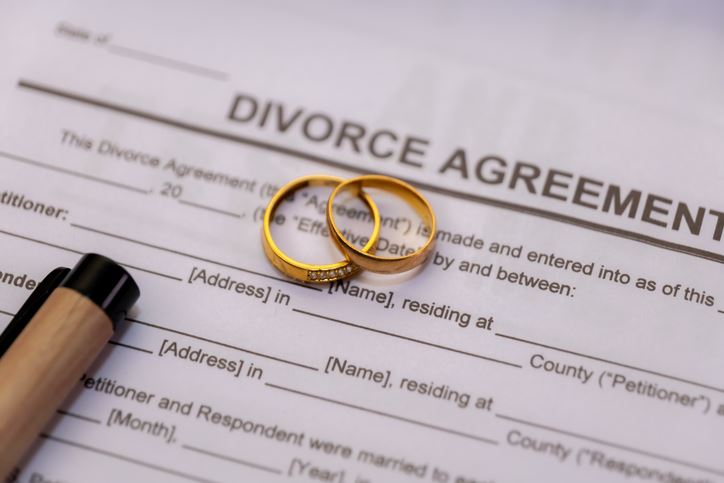
When a marriage reaches the point where divorce becomes necessary, many people are surprised to learn that Ohio law requires a legal reason—or "ground"—for ending the marriage. While some divorces are based on mutual agreement that the relationship can no longer continue, others involve allegations of misconduct or other circumstances recognized by state law.
Understanding the grounds for divorce in Ohio can help you determine which legal approach may apply to your situation and what to expect as your case moves forward.
What Does "Grounds for Divorce" Mean?
Grounds for divorce are the legally recognized reasons a court may grant a divorce. When filing for divorce, the spouse initiating the case must identify one or more grounds that support the request to dissolve the marriage.
Ohio recognizes both no-fault and fault-based grounds for divorce.
No-Fault Grounds for Divorce in Ohio
No-fault divorce allows spouses to end their marriage without proving that either party engaged in wrongdoing.
Incompatibility
One of the most common grounds for divorce in Ohio is incompatibility.
Incompatibility generally means that the spouses can no longer maintain a successful marital relationship due to irreconcilable differences. Neither spouse is required to prove misconduct.
However, incompatibility can serve as grounds for divorce only if both spouses agree that it exists. If one spouse denies incompatibility, the court cannot grant a divorce solely on that basis.
Living Separate and Apart for One Year
Ohio also permits divorce when spouses have lived separate and apart without cohabitation for at least one year.
This ground allows couples to pursue divorce without assigning blame while demonstrating that the marriage has effectively ended.
Fault-Based Grounds for Divorce in Ohio
In some situations, one spouse may choose to file based on specific misconduct or circumstances recognized under Ohio law.
Adultery
Adultery remains a valid ground for divorce in Ohio.
To rely on adultery as a ground, the filing spouse generally must present evidence demonstrating that the affair occurred. Direct evidence is not always necessary, but sufficient proof must exist to support the claim.
Extreme Cruelty
A divorce may be granted if one spouse has subjected the other to extreme cruelty.
Extreme cruelty can take many forms and may include physical abuse, severe emotional abuse, threats, intimidation, or other conduct that makes continued cohabitation unreasonable or unsafe.
Gross Neglect of Duty
Gross neglect of duty refers to a spouse's substantial failure to fulfill marital responsibilities.
Examples may include:
- Abandoning family obligations
- Refusing to provide financial support
- Consistent failure to contribute to the marriage in significant ways
Courts evaluate these claims based on the specific facts of each case.
Habitual Drunkenness
A spouse's ongoing alcohol abuse may serve as grounds for divorce when it has become habitual and negatively affects the marriage.
Evidence may include testimony, treatment records, criminal records, or other documentation demonstrating a pattern of excessive alcohol use.
Fraudulent Contract
A divorce may be granted if one spouse obtained the marriage through fraud.
To qualify, the fraud generally must relate to an essential aspect of the marital relationship and be significant enough that the marriage would not have occurred had the truth been known.
Willful Absence for One Year
Ohio law recognizes willful absence as grounds for divorce when one spouse voluntarily leaves and remains absent for at least one year.
The absence must generally be intentional and without justification.
Imprisonment
A divorce may be granted if one spouse is incarcerated in a state or federal correctional institution at the time the divorce action is filed.
Divorce Obtained Outside Ohio
A spouse may seek divorce if the other spouse has obtained a divorce outside Ohio that releases only the spouse who secured the decree while leaving the filing spouse bound by the marital obligations.
Although relatively uncommon, this remains a recognized statutory ground.
Does the Ground for Divorce Affect the Outcome?
In many cases, the specific ground cited has little impact on issues such as:
- Property division
- Child custody
- Child support
Ohio courts primarily focus on statutory factors when making decisions regarding these matters.
However, the circumstances underlying a fault-based ground may become relevant in certain situations. For example, misconduct involving financial waste, domestic violence, substance abuse, or parental fitness could potentially influence related legal issues.
An experienced family law attorney can help determine whether asserting a fault-based ground is appropriate based on your circumstances.
Divorce vs. Dissolution of Marriage
It is important to distinguish divorce from dissolution of marriage in Ohio.
A dissolution of marriage is available when both spouses fully agree on all issues before filing. Because the parties jointly submit a separation agreement, no grounds for divorce must be established.
Dissolution is often a faster and less adversarial option for couples who can work cooperatively to resolve their differences.
Choosing the Right Approach
Every marriage and every divorce is unique. While some couples prefer a no-fault approach that minimizes conflict, others may have circumstances that warrant pursuing fault-based grounds.
This usually depends upon:
- The level of cooperation between spouses
- The complexity of financial issues
- Child custody concerns
- The facts surrounding the breakdown of the marriage
Carefully evaluating your options with qualified legal counsel can help you make informed decisions from the outset of your case.
Divorce Attorneys, You Can Count On
If you are considering divorce and have questions about your legal options, the experienced family law attorneys at Haynes Kessler Myers & Postalakis are here to help. Our team provides knowledgeable guidance and personalized representation for clients throughout Worthington, Columbus, and the surrounding communities. From divorce mediation to arbitration to modifications, we can help with many legal ends.
Contact us online or call (614) 892-9909 today to schedule a consultation and discuss your family law matter with an experienced Ohio divorce attorney.